How to Choose a Melbourne CBD Office Your Team Actually Wants to Commute To
Mandating office attendance without addressing commuter friction can undermine employee engagement and make talent retention more challenging. While business leaders recognize the commercial necessity of an inner-city presence, employees evaluate office days through a practical lens: how much friction does it take to get to their desks?
In Melbourne’s distributed hybrid landscape, selecting the right corporate address is no longer just a branding exercise—it is an operational strategy that dictates productivity, commuter buy-in, and commercial agility.
The Enduring Gravity of the Melbourne CBD
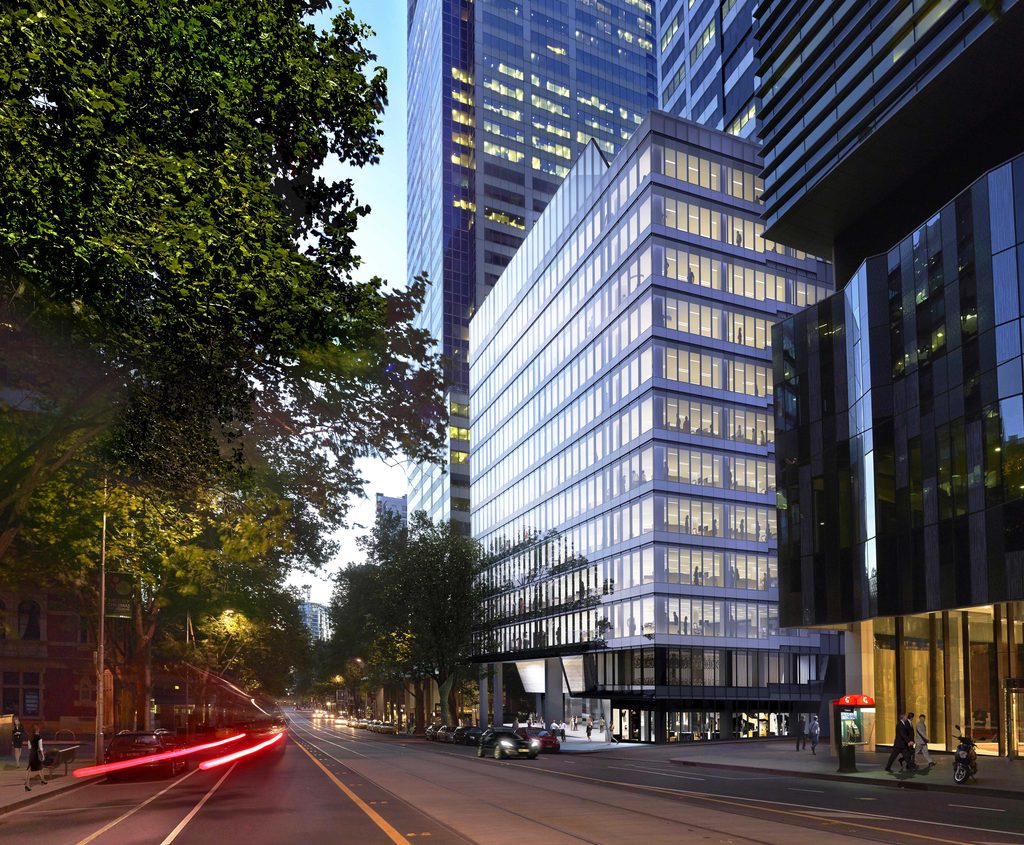
Despite the rise of decentralized and suburban working arrangements, a Melbourne CBD address remains essential for commercial credibility. Establishing a presence within the Hoddle Grid places organizations directly alongside institutional banks, court networks, regulatory agencies, and key corporate partners:
- The Financial Spine (Collins Street): Housing institutional private credit funds, wealth managers, and enterprise tech providers along Melbourne’s premier banking artery.
- The Legal Precinct (Bourke Street): Placing barristers, commercial litigation practices, and risk consultancies within steps of the Supreme, County, and Magistrates’ Courts.
Far from being occupied only by overseas branch offices, flexible workspaces across Melbourne are anchored by domestic firms; established Australian enterprises represent between 70% and 84.5% of total occupancy across prime commercial towers. While home or satellite workspaces handle administrative tasks, a central corporate address serves as the primary anchor for dealmaking, client hospitality, and complex collaboration.
The Commuter Dilemma: Eliminating the “Double Commute”
Employees rarely resist in-person collaboration; they resist transit friction. Melbourne’s workforce is among the most geographically dispersed in Australia, drawing heavily on regional lines from Geelong, Ballarat, and Bendigo, as well as expansive outer-suburban rail networks.
The primary barrier to consistent office attendance is the transfer penalty. Arriving at a major rail terminal only to wait for a crowded connecting tram adds 40 to 60 minutes of lost time each day. Removing this “double commute” directly improves office attendance:
- Southern Cross Proximity: Compass Offices at 459 Collins Street and 570 Bourke Street sit within a 5-minute walk of Southern Cross Station, providing a direct ” single-seat” journey for regional and western suburban commuters.
- Flinders Street & The Free Tram Zone: 360 Collins Street is located within a short walk of Flinders Street Station, with direct tram routes situated immediately outside building entrances across all three Compass Offices locations.
- Active Commuting & Hotel-Grade Facilities: For professionals cycling along the Yarra River and Capital City Trail corridors, premium building amenities remove the friction of active travel. Prime commercial towers increasingly offer hotel-standard End-of-Trip (EoT) infrastructure—including secure badge-access bike cages, locker amenities, and private shower suites—complemented by on-site tenant gyms, breakout spaces, and ground-floor cafés to support a seamless workday routine.
The Melbourne CBD Circle: An Ecosystem of Capital, Courts, and Commerce
Positioning your business within the core CBD grid provides immediate, walkable proximity to Australia’s most dense concentration of commercial, legal, and civic institutions:
- The Judicial & Court Quarter: Clustered around William and Bourke Streets are the Supreme Court of Victoria, the County Court, the Melbourne Magistrates’ Court, and the Federal Court. For barristers, litigation teams, and forensic specialists, locating at an address like 570 Bourke Street eliminates transit time between client consultations and daily court appearances.
- The Institutional Banking & Financial Spine: Along Collins Street lies Australia’s financial powerhouse, home to the national and regional headquarters of the Big Four retail banks, international investment houses, the ASX, and private debt funds. Bases such as 360 Collins and 459 Collins place wealth advisers, FinTech platforms, and trading firms directly into the flow of capital and executive dealmaking.
- Regulatory & Statutory Bodies: Critical state and federal institutions—including the Australian Securities and Investments Commission (ASIC), the Fair Work Commission, and key state government departments—operate within a 5-to-10-minute walk across the central grid.
- World-Class Dining & Client Hospitality: Beyond corporate offices, the immediate perimeter delivers Melbourne’s premier business-lunch and client-entertaining destinations—from the dining institutions along Flinders Lane and Little Collins Street to high-end retail hubs and boutique laneway cafés that make meeting clients outside the boardroom effortless.
Making the Commute Worth the Trip
A successful return-to-office strategy starts with removing transit friction. By positioning your business steps from Melbourne’s primary transport hubs, you give your team an office experience that is genuinely worth the commute.
See how MerchantSpring scales with confidence at Compass Offices using prime transit links and adaptive space.
Ready to see how easy your commute can be? Book a tour at 360 Collins, 459 Collins, or 570 Bourke today.