Serviced Offices Explained: Types, Costs, and How to Choose the Right Flexible Workspace
As businesses expand into new regional markets or adapt to hybrid work models, securing the right workspace is a critical operational decision. Traditional commercial leases often require multi-year commitments, substantial capital expenditure (CapEx), and complex fit-out projects. As a result, companies increasingly turn to flexible workspace solutions.
This guide breaks down everything you need to know about serviced offices—how they compare to other flexible workspace models, their financial and operational advantages, cost structures, and how to navigate the onboarding process.
What Is a Serviced Office?
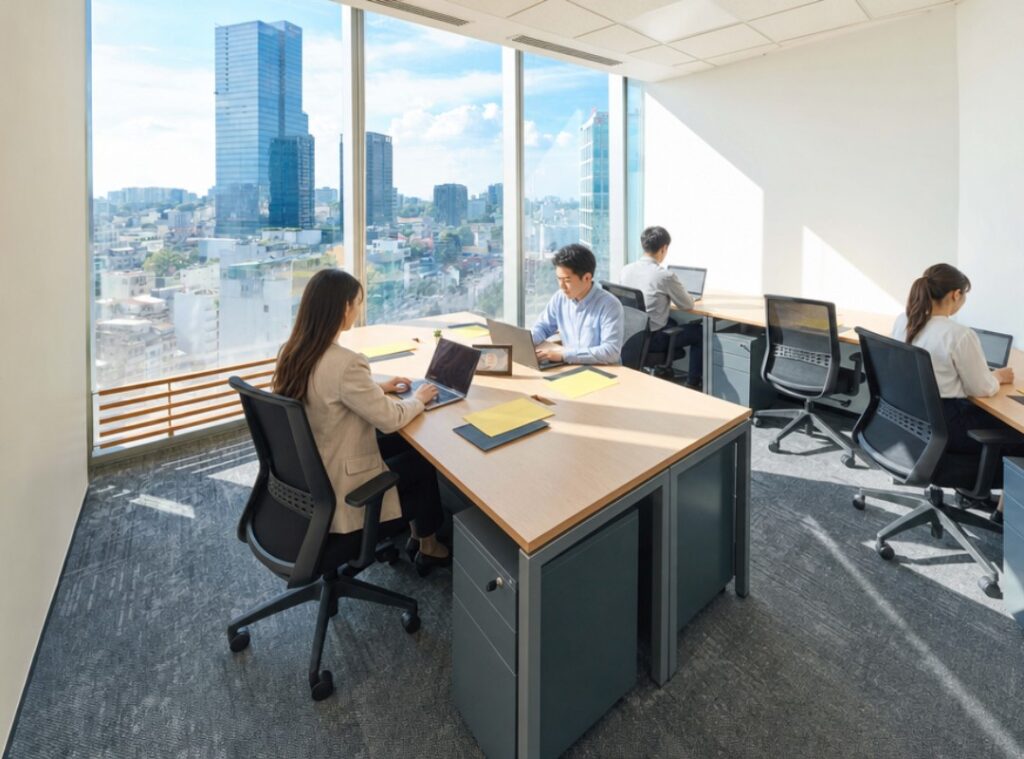
A serviced office is a fully managed commercial workspace equipped with ergonomic furniture, high-speed enterprise IT infrastructure, and on-demand administrative support, allowing companies to start operations immediately upon signing an agreement. Unlike conventional commercial leases where tenants manage their own interior construction, utilities, and facility maintenance, serviced offices offer a turn-key environment managed entirely by the workspace provider.
Flexible workspaces encompass several distinct formats depending on your team’s size, privacy requirements, and budget:
| Workspace Type | Key Features | Best Suited For |
| Serviced Office | Fully furnished, sound-insulated private suites with access to front-desk reception, secretarial services, and IT support. | Established SMEs, corporate project teams, and multinationals setting up regional branch offices. |
| Private Rental Office | Dedicated, lockable private rooms with standard utilities and shared basic amenities, but minimal administrative support. | Small teams prioritizing basic privacy and operational independence. |
| Dedicated Coworking Desk | Assigned desk within a secure, shared open-plan floor plan with access to community amenities. | Freelancers, remote professionals, and early-stage startup founders. |
| Hot Desk / Open Coworking | Flexible, unassigned seating in collaborative open-plan lounges and shared workspaces. | Digital nomads, mobile sales teams, and agile workers needing occasional workspace access. |
Core Benefits of a Serviced Office
For growing enterprises and international businesses entering new markets, serviced offices provide distinct strategic advantages over long-term commercial leases:
- Drastically Lower Upfront Capital Expenditure (CapEx): Traditional commercial leases typically require a security deposit equivalent to 3 to 12 months’ rent, alongside fit-out construction, professional design fees, IT cabling, and office furniture procurement. Serviced offices require a standard 1 to 2-month refundable deposit with zero initial fit-out costs.
- Rapid Deployment: Conventional office preparation takes anywhere from three to six months. With a serviced office, enterprise-grade workspaces can be activated within 24 to 48 hours of contract execution.
- Prestigious Business Addresses: Workspace providers maintain prime Central Business District (CBD) locations—such as Central in Hong Kong, Sydney CBD in Australia, Raffles Place in Singapore, or Ginza and Shibuya in Tokyo. This gives your business immediate corporate credibility on business registries, collateral, and marketing assets.
- Enterprise Infrastructure & Shared Amenities: Access high-speed dedicated bandwidth, soundproof meeting rooms, executive boardrooms, business lounges, and breakout pantries without building or maintaining them independently.
- Contract Flexibility & Risk Mitigation: Traditional office leases lock businesses into 2- to 5-year commitments with restrictive exit clauses. Serviced offices offer terms ranging from 1 to 24 months, enabling companies to scale desk counts up or down in response to market shifts.
Key Considerations and Potential Drawbacks
While serviced offices offer unmatched agility, certain trade-offs should be evaluated before committing:
- Limited Interior Customization: Workspaces arrive fully furnished and configured to brand-neutral commercial standards. Major structural changes, custom paint palettes, or specialized hardware installations are generally restricted.
- Shared Facilities Management: Boardrooms, conference spaces, and casual lounges are shared with other tenant companies. During peak business hours, meeting room availability requires proactive booking.
- Unit Economics at Enterprise Scale: For large static teams (50+ staff) staying in one location for more than five years, the per-square-foot cost of a serviced office—which bundles utilities, cleaning, reception, and maintenance—may eventually exceed a long-term bare-shell lease.
- Suite Size Ceilings: Most serviced floor plates cater to teams ranging from 1 to 20 people per suite. Companies requiring expansive single-floor private compounds should ensure the provider offers custom enterprise suite configurations or multi-room expansion options.
Cost Breakdown: What to Expect Globally
Pricing varies by global city, building tier (Grade A vs. Grade B), and suite configuration:
| Expense Item | Estimated Cost (USD) | Notes |
| Initial Security Deposit | 1–2 months’ license fee | Fully refundable upon conclusion of the term. |
| Private Office (1 Person) | $400 – $1,200 / month | Varies based on CBD tier, window views, and market. |
| Team Office (3–5 Persons) | $1,200 – $4,500 / month | Dedicated, lockable private suite |
| Dedicated Coworking Desk | $250 – $550 / month | Includes access to shared lounges and amenities. |
| Virtual Office Address | $50 – $150 / month | Mail handling and local company registration address. |
Important: When reviewing commercial quotations, verify what is bundled into the recurring license fee. Premium operators include enterprise internet, daily cleaning, utilities, incoming call management, and complimentary beverages, while others may bill meeting room hours or print quotas separately.
How to Select the Right Workspace Provider
1. Align Size with Your 12-Month Staffing Plan
Choose an operator that allows flexible internal transfers. If your headcount increases from 4 to 10 within six months, your provider should allow you to upgrade to a larger private office without terminating your primary agreement.
2. Audit Enterprise IT and Information Security
For organizations handling confidential financial, legal, or personal customer data, evaluate technical safeguards:
- Dedicated VLANs and custom private subnets
- Enterprise-grade Wi-Fi security protocols
- 24/7 CCTV surveillance and multi-tier access control (keycards or biometric entry)
- Compliance readiness for international data standards (such as ISO 27001 or SOC 2)
3. Evaluate Location and Regional Network Accessibility
Assess commuting convenience, proximity to major transport hubs, and access to key clients. If your team travels across the Asia-Pacific region, select a provider with an extensive cross-border network—such as Compass Offices, which operates prime business centers across Hong Kong, Australia (Sydney, Melbourne), Singapore, Japan (Tokyo), the Philippines (Manila), and Vietnam (Ho Chi Minh City). Regional memberships often include roaming lounge and day-office access across these international hubs.
4. Review Renewal and Cancellation Terms
Confirm standard notice periods (typically 30 to 60 days before contract expiry), dilapidation terms, and whether automatic renewal clauses apply. Transparent contracts ensure predictable overhead management.
The Step-by-Step Move-In Process
- Inquiry & Needs Assessment: Define your target headcount, commencement date, and essential service requirements, then submit an inquiry to shortlist candidate centers.
- Site Tour & Formal Quotation: Tour candidate locations to inspect acoustic performance, natural light, lounge maintenance, and staff professionalism. Request an itemized proposal detailing bundled services.
- Application & Compliance Screening: Submit standard corporate documents, including your Business Registration / Certificate of Incorporation, corporate representative ID, and basic KYC (Know Your Customer) compliance verifications.
- Agreement Execution & Initial Payment: Sign the standard flexible license agreement digitally and transfer the security deposit along with the first month’s license fee.
- Onboarding & Immediate Start: Receive building access passes, dedicated Wi-Fi credentials, and a facility orientation. Bring your laptops and commence operations immediately.
Selecting the right workspace balances immediate operational agility with long-term cost efficiency. By opting for a fully managed, turn-key serviced office in a prime business hub, your organization can eliminate setup friction, protect cash reserves, and focus resources directly on core business expansion.
Ready to elevate your workplace strategy and scale your business without the overhead of a traditional lease? Whether you are establishing a regional headquarters, launching a new market venture, or looking for a more agile hybrid workspace, choosing the right environment is the first step toward sustained growth.
Find Your Ideal Workspace Today
Explore flexible private offices, dedicated suites, and enterprise custom spaces across prime business districts in Hong Kong, Australia, Japan, Singapore, Malaysia, the Philippines, and Vietnam.